Monday 16th February 2026
Galle : Turtle Preservation Centre
Today was the first day that we have travelled along a highway in Sri Lanka. Along the dual carriageway we saw a few yellow signs saying “Warning Peacocks”. The bird thrives all over the country, and in some farming areas it is considered a pest.
Our final destination today will be Kalutara, a small beach town on the south- west coast. On the way we will be visiting a UNESCO heritage site, Galle, a fortified city that was built by Europeans.
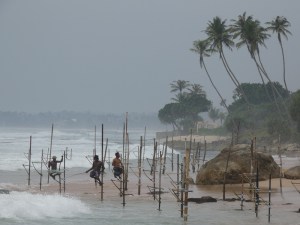
While we were driving along the stunning Indian Ocean coast road, we stopped to see some stilt fishermen. In years gone by, this was a traditional way to fish without the need of a costly boat. It is a rarity to see the stilt fishermen these days, but there are plenty of locals that happily pose for photographs for a few rupees.
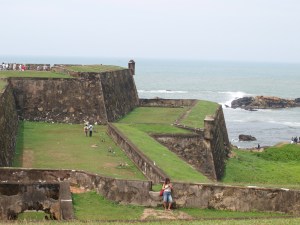
It was early afternoon when we arrived in Galle. With Danesh, we wandered around the iconic fort which was originally constructed in the 16th century by the Portugese. The Dutch expanded it in the 17th and 18th century, and later during the British period more additions to the site were made.
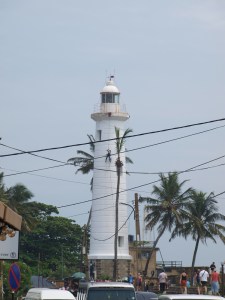
The five of us stopped for a refreshing cold drink, and then Dave and I wandered off in one direction, and our friends in another to explore the colonial streets.
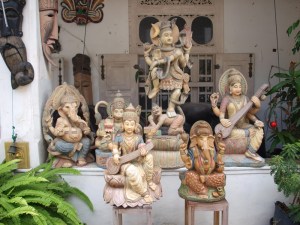
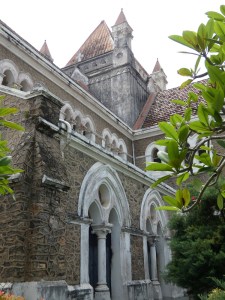
We spent a while browsing all the carved and painted deities in one of the many shops. A few steps away, we came across the Anglican All Saints Church which was established in 1871 for the then growing British population.
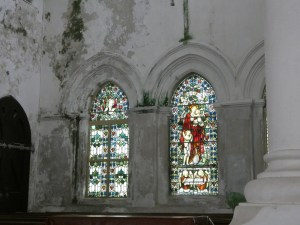
Today, the interior of the church shows signs of decay, and is in need of renovation.
The church is believed to have been built on the site of an old courthouse. Some locals say the altar is in the exact place where the city’s gallows were situated.
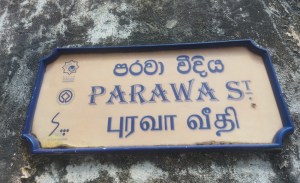
It was interesting walking through Galle’s historic streets. Many expats have made the refurbished colonial houses their home.
The names of the streets include Parawa, Cross and Church.
We had a quick peek at the international cricket ground. Once it was said to be one of the most beautiful grounds in the world. The ground was destroyed in the 2004 tsunami, but has since been rebuilt.
Danesh had told us to take as much time as we required. Coincidentally, we met up at the meeting point within two minutes of each other.
Our final visit of the day was to a Turtle Preservation Centre. Sri Lanka is home to five species of the known seven sea turtles in the world. One of the guides accompanied us and he was extremely informative.
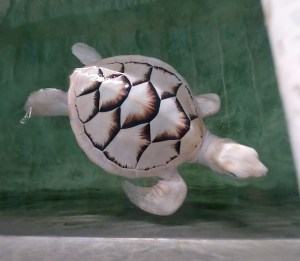
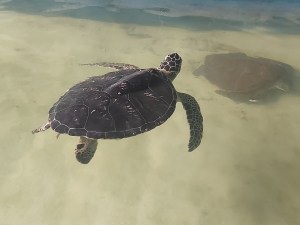
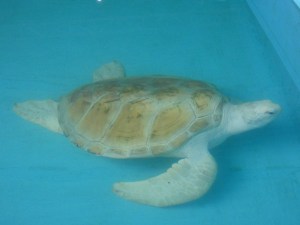
Some of the turtles were injured, and had been brought to the centre by local fishermen. There were a couple of huge turtles, one had been injured by a motorboat, unfortunately losing three of its flippers. The other was attacked by a shark. “Anyone still fancy swimming tomorrow?” I asked. The centre will repair the injuries as far as they can, and if possible return the reptiles to the wild.
In the sanctuary there are two albino turtles, these will stay there for life as the sun would cause them massive health problems. They are expected to live until they are around 35 years old. Usually turtles live until they are about 100 years old.
There were hundreds of tiny baby turtles, which, if we had been there later in the afternoon, we could have helped them be released in to the ocean. This needs to be done after the intense heat of the day and more often than not at sunset.
After leaving the centre, we drove to a hotel on the Indian Ocean where we will stay for the final 3 nights of our holiday.
Previous Next

 lindaruddstravels.com